
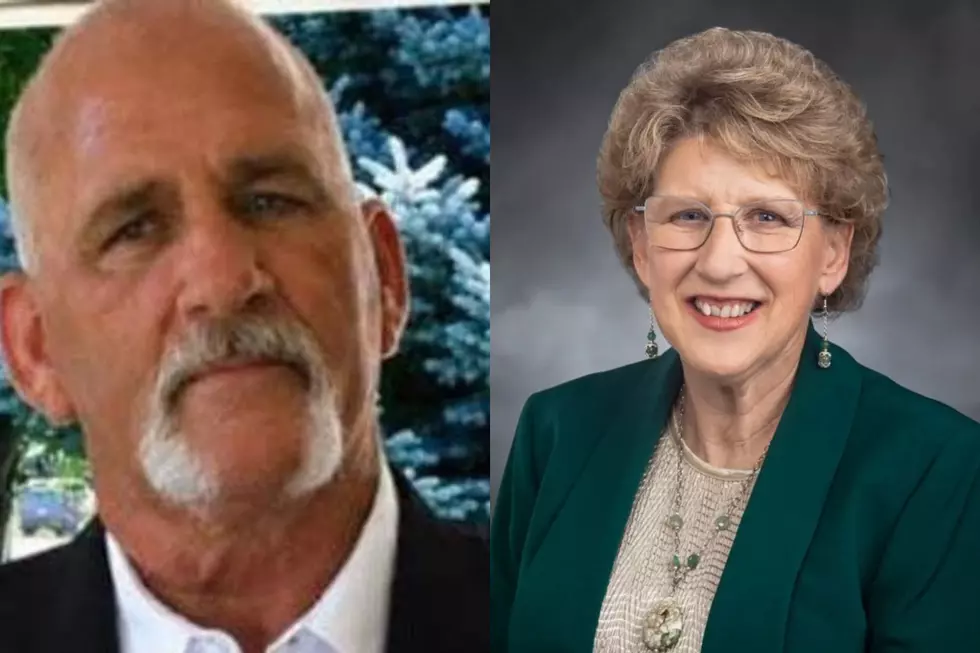
Republican Incumbent Short Faces Independent McCoy In 7th District Senate Battle

- Continue my work with the Office of Insurance Commissioner to address the challenges homeowners are having in obtaining and/or keeping their homeowners' insurance relative to wildfire risk. Two bills last session made it through the Senate but stalled in the House. Insurance companies need to be upfront with policy holders as to their decisions on wildfire risk. Credit should be given for reducing risk on property, in communities, and at the state level.
- Continue efforts to ensure that our state has rigorous fire preparedness and prevention strategies and funding. That would include valuable partnerships that our local conservation districts and fire districts have with private landowners and Firewise communities.
- Restructure the State Building Code Council in how it conducts meetings, proposes codes, and makes its decisions. Council work should come back to the legislature for enactment. That would ensure that their policies would have adequate public debate, review, and potential amendments, just as legislative bills currently have.
I have been the current senator for the 7th District since 2017. My continued commitment and priority is that my constituents' voices are heard and your communities are understood. Constituents get the benefit of the long-time partnerships and very strong bipartisan relationships that I've developed and my work ethic based upon trust, mutual respect, give and take, and common ground, working tirelessly for solutions, not caring who ultimately gets the credit. I also have extensive experience and a deep understanding of the legislative process and issues that impact you and your families.
TSM: What policy solutions do you support to address housing affordability?
--Shelly Short
The lack of housing affordability is a multi-faceted issue—land use, incessant regulations and codes, workforce shortages, supply costs, and housing types impact this issue. I've learned that condominiums do represent first-time home ownership opportunities. And I've supported needed reforms focused on condominiums, which have begun to spur building growth.
I support expanding career-connected learning and opportunities for mentoring in schools along with expansion of apprenticeship programs, which over time will assist in reducing workforce shortages.
Policy changes need to be identified in tandem at both the state and local government levels because regulations exist at both levels. In the short term, the state needs to stop adopting policies that add significantly to the cost of housing and building timelines, especially in the area of energy codes. The Growth Management Act (GMA), originally sold as local future planning, has turned into a regulatory morass and has needlessly limited access to buildable lands. The state building code council (SBCC) needs a significant overhaul on the "need to codes" versus the "want to codes." Currently, the SBCC has become a vehicle to adopt codes administratively where these same codes stalled legislatively. Also, there needs to be a broader discussion of what constitutes basic health and safety codes.
First, state spending has doubled in just ten years with no regard to sustainability and the impact that growth has had on working families and small businesses. In 2025, Senate Republicans offered a proposed comprehensive budget bill with numbers that offered alternative solutions. We were able to show that in fact, the budget could be balanced and could fund essential services for the vulnerable without the need for additional taxes. The majority went in a different direction that markedly increased taxes and needlessly grew government spending. I don't believe the state budget should be all things to all people because the state then struggles to truly help those who need it. We need to grow our state's economy in a way that adds additional revenue without the need to increase taxes on those already paying.
I support a comprehensive review of programs, agencies, etc. to be undertaken in a zero-based budget discussion and review. A focus on sections of the state budget over multiple sessions is the place to start within a priority of the government framework. That is how the state budget spending can be refocused and right-sized appropriately and can be a safety net for those who need it most. While that work is underway, the legislature should minimize budget increases.
TSM: What social safety net programs deserve more support?
-- Shelly Short
- shelly@vote4shelly.com | www.vote4shelly.com | (509) 994-7430
- ronmccoy7thdistrict@gmail.com | mccoyforwa.com | (509) 590-9666