
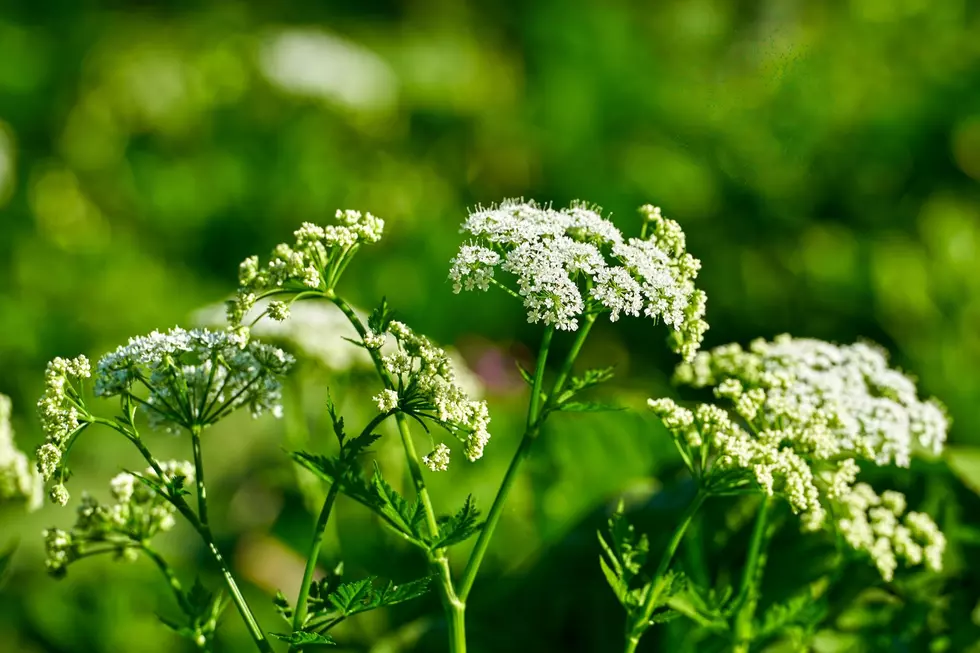
Watch Out For A Deadly Washington Plant Hiding In Your Backyard
This "scary, highly toxic" plant that can be deadly, even if you don't touch it, is found in Washington and across the country. Here's how you can help identify the plant to avoid.
Officials are once again warning about a poisonous plant that can be deadly, which is found in Washington. This toxic plant is dangerous to both humans and animals, Chelan County warns.
In Chelan County, poison hemlock has been found in Manson and Malaga...people mistake it for many edible and other deadly wild plants. In Washington state, one person died in 1999 after eating poison hemlock, and another in 2010.

'Scary, Toxic' Plant That Can Be Deadly Spreading in Washington
Poison hemlock grows in backyards, flower beds, and parks. The National Park Service labels it as "highly toxic" and reports it's found in almost every state in the nation, including Washington.
Our neighbors in King County report that poison hemlock spreads easily through seeds to new areas and grows in dense, tall patches. The poisonous plant is often found in open sunny areas, fields, vacant lots, and along roadsides. Eating even a small amount of any part of this plant can be deadly to people, livestock, and wildlife.

You don’t even need to touch Poison Hemlock for the plant to be fatal.
A man from the Midwest nearly died from it last May, without ever touching Poison Hemlock.
The Ohio man became very ill days after using a chainsaw to clear honeysuckle and weeds around his home. He recalls going to the ICU but has no memory of the following three weeks. The fortunate survivor spent over 100 days in the hospital. He did survive his exposure to the toxic plant, but many others don't.
Poisonous Washington Plant That Kills Humans and Pets is Spreading
Poison hemlock is highly toxic to humans. When working with poison hemlock, a Washington state government website warns to “always wear gloves, long sleeves, and long pants when handling this plant.”
Below are photos to help you identify a poison hemlock plant and its lookalikes.
Poison Hemlock and Plants That Resemble Poison Hemlock
Gallery Credit: Tammie Toren
'Scary, Toxic' Plant That Can Be Deadly, Spreading in New York
More From KW3